What The Service Involves
An intruder alarm needs to suit the building and the people who open and close it. The starting point is understanding possible entry routes, valuable areas and normal activity outside business hours. We use that information to discuss detection, setting arrangements and whether a local warning, remote notification or monitored response is appropriate.
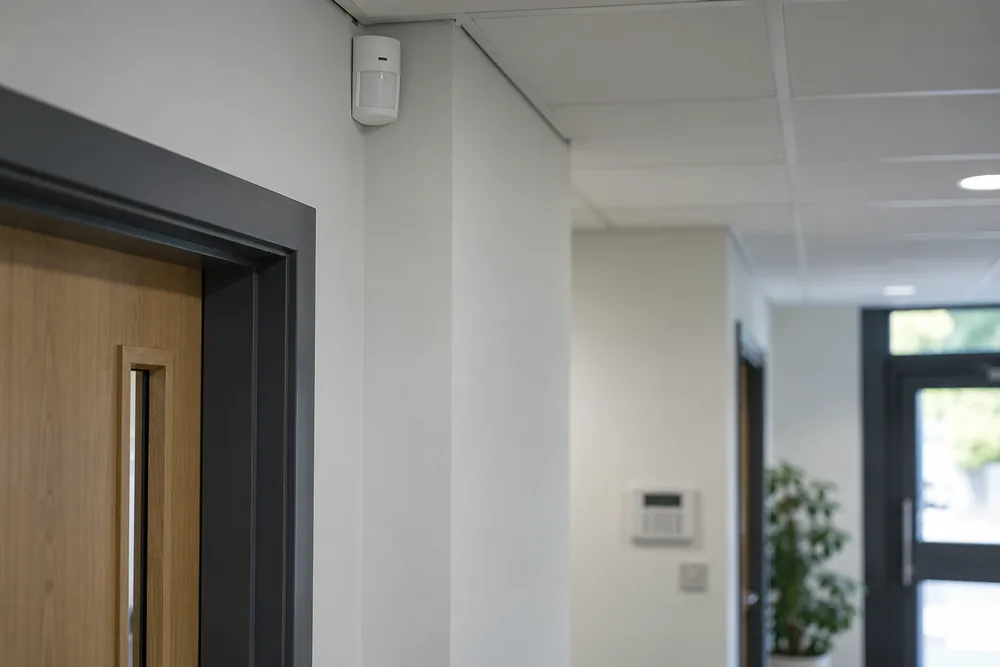
Perimeter contacts can detect a door or window opening, while movement detectors protect selected internal spaces. The choice and positioning depend on the risk, the environment and possible sources of unwanted activation. Pets, moving stock, heaters and draughts should be discussed, rather than dealt with through a setting that quietly removes useful protection.
A System That Fits The Building
Wired equipment can suit a planned refurbishment with accessible cable routes. Wireless or hybrid equipment may be useful where finishes must be preserved, subject to radio checks and an agreed battery maintenance plan. No transmission method removes the need to assess the premises, and an existing panel may limit which new devices or signalling services can be added.
Setting the alarm should match your actual opening and closing routine. Separate areas can help when cleaners, tenants or staff work different hours, but zones and permissions need explaining clearly. Entry routes, user codes and the response to a missed closing should be agreed before the system is commissioned, so the normal working day does not generate avoidable activations.
Detection that fits your working day.
When To Review Your Security
A new alarm or review is sensible when a business takes on premises, the insurer specifies protection or the existing alarm is unreliable. Ask the insurer for its requirements before choosing a package. If police response is being considered, discuss the eligibility, certification, monitoring and registration requirements early instead of assuming that any app-connected alarm qualifies.
Standards And Responsibilities
The BS EN 50131 series covers intrusion and hold-up alarm systems. PD 6662 is the UK scheme for applying the relevant standards, and BS 8243 addresses confirmed alarm signals where police response is intended. A documented risk assessment and insurer requirements guide the system specification, rather than every premises automatically receiving the same grade or response arrangement.
Read the relevant technical guidance
How The Work Is Planned
- Review the premises, likely entry routes and insurer requirements. Discuss who holds keys, who sets the alarm and what response is wanted.
- Specify detection, coverage, user permissions and signalling. Survey wiring or radio paths and identify any environmental causes of false activations.
- Install and test each detection zone, tamper condition and agreed notification route. Demonstrate entry and exit routines using the real access doors.
- Train the authorised users, record the zone descriptions and explain faults, battery care and service arrangements. Confirm the separate monitoring agreement if one is selected.
What Affects The Cost
Intruder alarm costs depend on the detector types, building layout, wiring, signalling and required certification. Monitoring, maintenance and communication subscriptions may be separate recurring items. Ask for a quotation that states the proposed grade where relevant, the covered areas, exclusions and any insurer-related requirements, so the installation can be compared on protection and usability rather than device count alone.
Choose A Response You Can Maintain
An alert only helps when somebody understands what to do with it. Before selecting notifications or monitoring, agree who can attend, who holds working keys and what happens if the first contact is unavailable. Consider holidays, changes of staff and loss of the normal internet connection. The system specification should explain which communication paths are used and how faults are reported, so the response plan remains practical after the initial installation and training are complete.
Handover And Ongoing Care
Keep user codes individual where the system supports them and remove access when someone leaves. Record changes to rooms, partitions and stock because they can affect detector coverage. If a fault or unwanted activation occurs, note the zone, time and surrounding activity rather than repeatedly resetting the alarm without investigating what caused it.
Your Questions Answered
Does A Monitored Alarm Automatically Bring Police?
A monitored alarm does not automatically qualify for police response. The installation, monitoring, confirmed signalling and registration must meet the applicable police requirements, and attendance remains subject to police policy. Ask for the intended response arrangement in writing, including keyholder duties, recurring costs and what happens if the system develops repeated unwanted activations.
Can An Intruder Alarm Work Without Broadband?
An intruder alarm can operate locally without broadband, while remote signalling depends on the equipment and communication service chosen. Some systems use a mobile connection or more than one signalling path. Check network compatibility, subscription costs and fault reporting with the proposed provider, particularly when an older installation depends on a telephone service that is being changed.
For a proposal based on your building, tell us about your intruder alarm installation requirements in Coventry.